What defines the approved color reference?
Use a numbered lab dip, a retained swatch or a named standard illuminant. A color word without a physical or spectral reference is not an approval.
FREE sourcing support and up to 3% coordination support for comparable factory quotations. Eligibility applies to qualified business buyers and is confirmed after we review your product, quantity, destination, and sourcing requirements.
A buyer brief, comparable material options, clear supplier responsibilities.
Independent apparel fabric sourcing
FiberBeacon Procurement is an independent sourcing partner. A thomas mason search identifies a starting hand, construction and finish language; it does not transfer brand inventory, authorization or equivalence. Match fiber composition, fabric construction, GSM and usable width before quotations are compared.
Send a fabric brief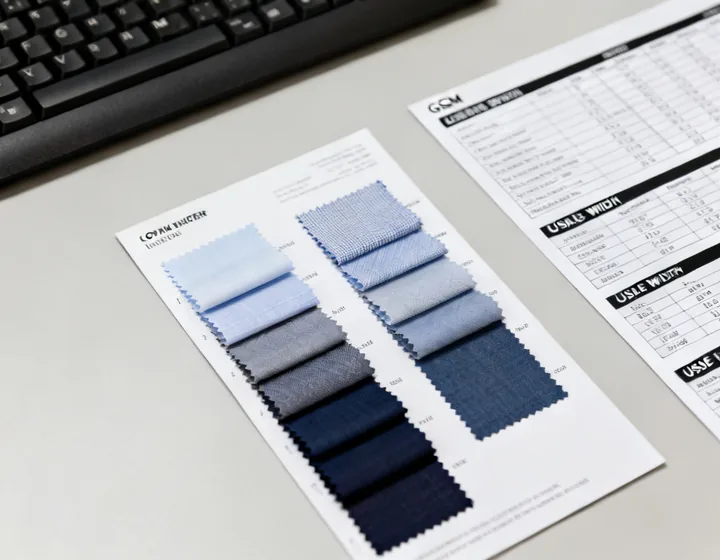
The inquiry catalog is a set of generic apparel fabric families. Cards on the products page are not thomas mason stock, mill SKUs or verified substitutes.
Write composition, construction, GSM, usable width, color, finish, quantity with unit, and destination. If shrinkage or colorfastness matters, name the method, edition and specimen condition rather than a marketing adjective. Leave unknowns visible instead of converting guesses into mill commitments. FiberBeacon Procurement coordinates comparable answers; it does not certify a pass/fail value for the trade.
A retained swatch is a target reference; bulk inspection uses separately agreed sampling, AQL and defect rules. Ask for a technical sheet tied to the quoted article, not a generic mill brochure. Certificates, ISO files or restricted-substance documents belong to the proposed supplier and lot. This desk does not publish a credential wall.
Use a numbered lab dip, a retained swatch or a named standard illuminant. A color word without a physical or spectral reference is not an approval.
Align composition, construction, usable width, finish, packaging, freight, duties, sampling charges and payment terms before ranking price.
Name the laboratory, mill in-house method or third party in the brief. A method title without edition, specimen and date is not a result.
Share open specifications and the decisions already made. Factory wholesale quotations are collected against that written scope; no lowest-price or fixed-saving claim is published.
Send a fabric briefQualified business buyers may receive FREE sourcing support and up to 3% coordination support on comparable factory quotations after we review the brief.
Eligibility applies to qualified business buyers and is confirmed after we review your product, quantity, destination, and sourcing requirements.